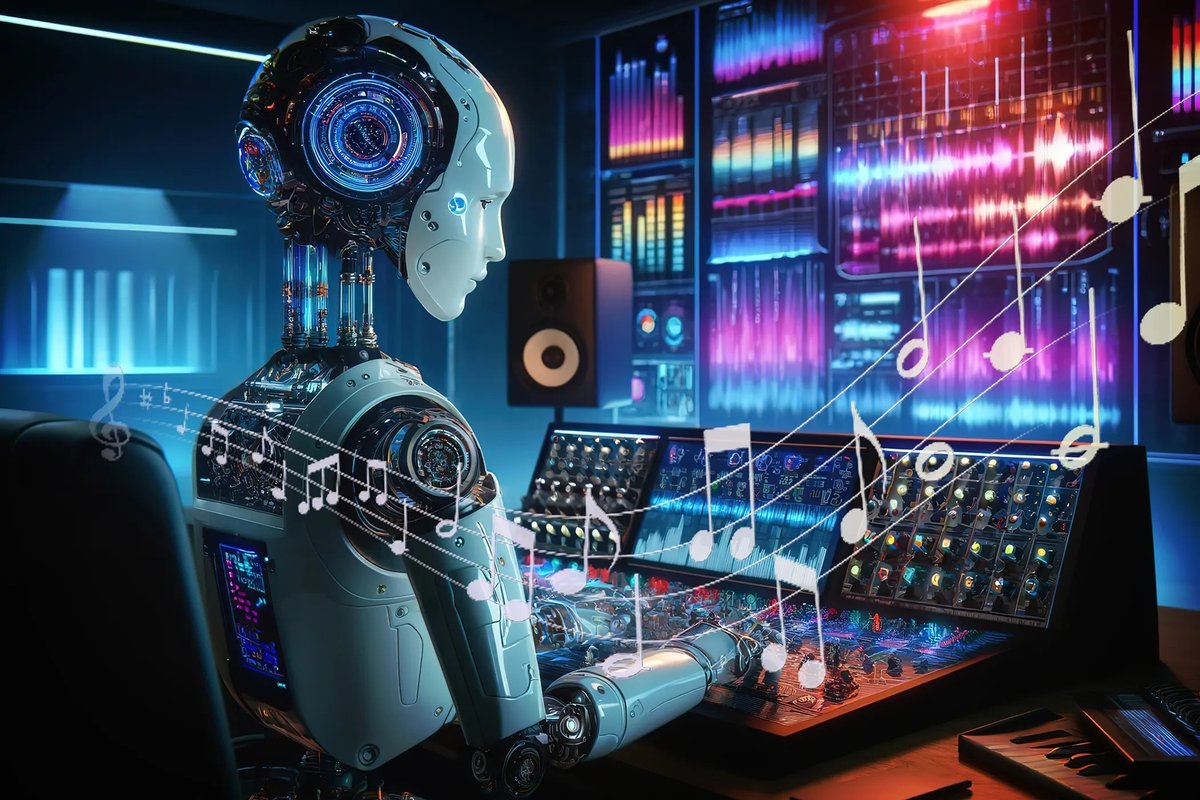
The sonic landscape is in the midst of a seismic shift, and at its vanguard lies The Future Of AI-Generated Extreme Music Content Transforms Soundscapes. For decades, extreme music — from the blistering aggression of grindcore to the suffocating atmospheres of dark ambient — has pushed the boundaries of human expression, often through raw visceral force and meticulous craftsmanship. Now, artificial intelligence is not just assisting but actively redefining what's possible, ushering in an era where unprecedented thrills and sonic innovation are within reach for any artist willing to explore.
This isn't about robots replacing artists; it's about powerful new tools that amplify human creativity, democratize access to high-quality production, and allow us to explore sonic territories previously deemed unreachable. The impact is profound, hinting at a future where the very definition of "music creation" expands exponentially.
At a Glance: AI's Extreme Music Revolution
- Unleashed Creativity: AI reduces friction from idea to creation, offering new textures, rhythms, and harmonic structures.
- Democratized Production: Solo artists and small bands can achieve professional quality without prohibitive costs or extensive studio time.
- New Tools, New Workflows: AI-powered inpainting, outpainting, stem separation, and smart mixing are becoming standard.
- Genre Expansion: AI excels in generating the grit, dissonance, and chaotic elements vital to industrial, harsh noise, dark ambient, and extreme metal.
- Ethical Crossroads: Questions of authorship, ownership, and ethical data usage demand immediate attention.
- Human-AI Collaboration: AI acts as a muse, a production assistant, and a partner, allowing artists to focus on core artistic intent.
The AI Revolution in Music: A Paradigm Shift
The music industry is experiencing its most significant transformation since digital recording, thanks to generative AI. This isn't just a technological upgrade; it's a fundamental change in how music is conceived, produced, and consumed. The friction between an artist's nascent idea and its fully realized sonic form is rapidly diminishing, paving the way for unprecedented creative freedom and accessibility.
Look at the past year alone: the viral sensation of ghostwriter's "Heart on My Sleeve" AI cover showed the public what was possible. Google's MusicLM began generating music from text prompts, while Paul McCartney utilized AI to resurrect John Lennon's voice for a new track. Artists like Grimes are even embracing the technology, offering 50% royalties for AI voice clones, signaling a potential new revenue stream. Even Meta has open-sourced its MusicGen model, demonstrating that quality music samples can now be conjured from simple text prompts. This technological surge isn't just a niche phenomenon; the global AI market is projected to reach an staggering $1.8 trillion by 2030, with AI-driven extreme music set to carve out a significant, boundary-pushing segment.
The "Midjourney Moment" for Music
What we're witnessing is akin to the "Midjourney moment" for visual art, where previously complex, time-consuming tasks like generating high-quality images became accessible to anyone with a prompt and an idea. For music, this means that creating professional-grade tracks, once the exclusive domain of heavily funded studios or years of dedicated practice, is becoming fast, easy, and achievable for both seasoned professionals and enthusiastic consumers. This dramatic reduction in barrier to entry promises to unleash an avalanche of new sounds and artists, particularly within genres that thrive on raw experimentation and sonic extremity.
Beyond the Mainstream: AI's Core Capabilities in Sound
AI's integration into music production extends far beyond simple automation. It's about augmenting human capability, providing tools that tackle complex challenges and unlock new avenues for expression across the entire spectrum of musical creation. These core use cases are setting the stage for AI's deeper dive into extreme sonic realms.
Adaptive Soundscapes & Personalized Playlists
Imagine music that truly understands your mood or activity, adapting in real-time. That's the promise of AI in functional music and personalized streaming. Apps like Endel, Brain.fm, and Aimi already generate adaptive, never-ending playlists tailored for focus, relaxation, or sleep. Spotify's AI DJ and "Daylist" offer personalized, auto-generated playlists that evolve with your taste. In the near future, we can expect AI to generate not just full tracks but "infinite songs," complete with AI-generated vocals, continuously evolving to perfectly match your experience. This lays the groundwork for extreme music experiences that are hyper-personalized, dynamically shifting to heighten feelings of dread, intensity, or catharsis for individual listeners.
The Exploding World of AI Covers
The internet has been captivated by AI covers, with #aicover videos racking up over 10 billion views on TikTok. Tools like RVC (Retrieval-based Voice Conversion), Covers.ai, Voicify.ai, Jammable, and Fineshare have made voice transformation incredibly accessible, allowing anyone to replicate a famous singer's voice. While legal rights remain a significant concern, some forward-thinking artists, like Grimes, are already exploring the opportunities for passive income through sanctioned AI voice clones. This phenomenon highlights AI's ability to precisely mimic and manipulate vocal textures, a skill that will prove invaluable in crafting distorted, monstrous, or ethereal vocals for extreme genres.
Democratizing Sound with Royalty-Free AI Music
For content creators, small businesses, and aspiring artists, the need for high-quality, royalty-free music is immense. AI is poised to dominate this space entirely. Products like Soundraw, AIVA, and Mubert generate unique, royalty-free tracks based on user-defined genre, mood, and energy parameters. This breaks the traditional tradeoff between quality and cost, making bespoke soundtracks affordable and accessible. Early adopters are primarily individual content creators and SMBs, but expect this category to expand rapidly to larger enterprises and be embedded into various platforms via APIs. This means a solo extreme artist can quickly generate backing tracks, atmospheric soundbeds, or sonic experiments without worrying about licensing fees or extensive composition time.
Empowering the Prosumer: AI Tools for Creative Workflow
The "bedroom producer" now has a suite of AI-powered tools that rival professional studio capabilities. These advancements empower individuals to elevate their creative output dramatically.
- Filling the Gaps: Inpainting & Outpainting: Imagine you have a few notes but need to complete a musical phrase – AI can "inpain" it. Or, you have a killer song section and need the next bars – AI can "outpaint," extrapolating the musical narrative (like MusicGen's "continue" setting). This offers endless possibilities for developing complex, evolving extreme compositions, filling sonic voids, or extending intricate rhythmic patterns.
- Bridging Analog and Digital: Audio to MIDI: Converting raw audio into MIDI data, complete with attributes like pitch bend and velocity, used to be a tedious manual task. Tools like Spotify's Basic Pitch now automate this, allowing artists to extract melodic and rhythmic information from any audio source and manipulate it further in their Digital Audio Workstation (DAW). For extreme music, this means effortlessly transforming distorted guitar riffs or harsh noise textures into manipulable MIDI, ready for new synthesizers or effects.
- Deconstructing Sound: Stem Separation: Decompiling a fully mixed song into its individual tracks—vocals, bassline, percussion, guitars—was once impossible. Technologies like Demucs make stem separation a reality. This allows artists to isolate elements from existing tracks (if cleared for sampling), remix, or study their construction. Imagine isolating a drum pattern from a black metal track, or a distorted vocal from an industrial piece, to serve as inspiration or a base for new creation.
The future workflow for a creative musician might involve sampling cleared songs, in-painting, out-painting, composing with generative tech, replicating studio musicians, and mastering—all with significant AI assistance.
Professional Power-Ups: AI for Artists & Labels
AI isn't just for hobbyists; it's rapidly integrating into professional workflows, streamlining tasks and enhancing creative possibilities.
- Browser-based Tools: Accessible, targeted tools are emerging for specific tasks. Meta MusicGen, AudioShake, Stemz, and Ultimate Vocal Remover are examples of online platforms that simplify tasks like stem splitting, audio enhancement, or vocal removal. These tools allow professionals to quickly prepare audio for remixing, sampling, or post-production without needing extensive software.
- AI-powered Virtual Studio Technologies (VSTs): These are plugins that seamlessly integrate into popular DAWs like Ableton Live, Pro Tools, and Logic Pro. Companies like Sonible, iZotope, and Mastering the Mix offer VSTs that assist with intelligent mixing, mastering, and audio repair. Imagine an AI analyzing your extreme metal track and suggesting optimal EQ settings or dynamically compressing elements for maximum impact.
- AI-first DAWs: Some startups are taking an even bolder approach, developing entirely new DAWs built from the ground up with AI at their core, such as Moises. These platforms promise deeply integrated AI functionalities that fundamentally change how artists interact with their music, from initial composition to final mastering.
This confluence of tools represents a "Midjourney moment" for music, making quality track creation faster and easier for both professionals and consumers, fostering an unprecedented era of sonic exploration.
Into the Abyss: AI's Seismic Impact on Extreme Music
The very essence of extreme music often lies in its ability to push boundaries, to evoke discomfort, awe, or visceral intensity through sound. AI is causing a seismic shift in this domain, not by replacing human artists, but by providing an unparalleled engine for generating the raw, chaotic, and often beautiful soundscapes that were once solely the domain of human intuition and painstaking effort.
Unleashing Unprecedented Thrills and Sonic Innovation
Extreme music thrives on pushing boundaries—sonic, emotional, and technical. AI is poised to become the ultimate co-conspirator in this endeavor. It helps create raw, visceral soundscapes that challenge our perceptions of harmony, rhythm, and texture. From the pulverizing intensity of death industrial to the hypnotic bleakness of funeral doom, AI can analyze, synthesize, and augment the elements that define these genres, creating compositions that offer unprecedented thrills and sonic innovation. Imagine AI capable of crafting a new grindcore text that feels both familiar and terrifyingly new. Exploring AI grindcore text generation gives a glimpse into how textual prompts can already guide such sonic conceptualization.
The Technological Architects of Chaos
At the heart of AI's capability to generate extreme music lie advanced machine learning models that can understand and generate incredibly complex audio textures, rhythms, and harmonic progressions.
- Generative Adversarial Networks (GANs): These models pit two neural networks against each other—a generator that creates new data (music) and a discriminator that tries to tell if the data is real or fake. This adversarial process forces the generator to produce increasingly convincing and complex musical forms, ideal for crafting intricate sonic chaos.
- Transformer Models: Originally known for their prowess in natural language processing, Transformers are now being applied to audio. They excel at understanding long-range dependencies in data, allowing them to grasp the overarching structure and evolution of musical pieces, which is crucial for generating coherent yet wildly experimental extreme tracks.
- Diffusion Models: These models work by taking a "noisy" input and iteratively denoising it, gradually revealing a structured output. For music, this means starting with pure sonic chaos and slowly refining it into a recognizable, yet extreme, musical form, offering a powerful way to generate evolving soundscapes and textures.
These technologies provide the underpinnings for AI to become a truly generative force in extreme music, capable of operating far beyond simple algorithmic loops.
Crafting the Extreme: Genre-Specific Applications
AI's versatility allows it to delve into the specific sonic characteristics that define various extreme genres, enhancing their core elements and pushing them into uncharted territory.
- Industrial Grit and Harsh Noise: These genres revel in discordant textures, metallic impacts, and the hum of machinery. AI can analyze and synthesize these elements with astonishing precision, creating layered soundscapes of grit, distortion, and chaotic rhythm that feel both organic and utterly alien. Imagine AI generating infinite variations of a decaying factory floor, complete with pulsating static and percussive clangs.
- Dissonance and Disruption: Harmonies & Rhythms: Extreme music often subverts traditional melodic and rhythmic structures. AI can explore microtonal scales, unconventional chord voicings, and complex polyrhythmic structures with ease, crafting dissonant harmonies and unsettling rhythms that challenge human perception and evoke profound unease or exhilarating chaos. This moves beyond simple chromaticism into truly abstract and alien musicality.
- Live Algorithmic Alchemy: For experimental and live performance artists, AI can become an interactive partner. Imagine AI analyzing live audio input from a drummer or vocalist and, in real-time, applying complex transformations, modulating effects, or generating improvisational elements that react to the human performer, creating a dynamic, unpredictable, and always-evolving sound. This opens doors for truly unique live extreme music experiences.
- Evoking the Void: Atmospheric & Visceral Soundscapes: Genres like dark ambient, drone, doom metal, and black metal rely heavily on creating immersive, often overwhelming atmospheres. AI can craft intricate, multi-layered soundscapes designed to evoke specific emotional states—dread, isolation, overwhelming power, or cosmic horror—with a precision that can magnify their visceral impact. From subtle, creeping textures to monolithic walls of sound, AI can paint sonic pictures of the void.
AI as Your Dark Muse: Collaborative Creation
Far from being a threat, AI often acts as a muse or a collaborative partner for artists. It can generate initial ideas, helping overcome creative blocks by offering unexpected juxtapositions of sound or structure. Beyond ideation, AI streamlines production workflows: automating tedious tasks like mixing, intelligent cleanup of raw recordings, or suggesting optimal EQ settings. This allows artists to shift their focus from the technical minutiae of production to their core artistic intent, liberating them to experiment more freely and delve deeper into conceptual development. The human touch remains paramount, but AI sharpens the tools and expands the canvas.
No Gates, No Limits: Democratizing Extreme Production
One of AI's most profound impacts on extreme music is its democratizing effect. Historically, achieving professional sonic quality in genres that demand intricate sound design, powerful mixing, and meticulous mastering required significant financial investment in specialized hardware, studio time, and highly skilled engineers. AI changes this equation. It enables solo artists, independent labels, and small bands to achieve sonic quality that rivals established acts, all without the prohibitive costs. This lowers the barrier to entry, expands creative possibilities, and fosters a more diverse and vibrant independent scene, allowing raw talent and innovative ideas to flourish irrespective of budget.
Navigating the Murky Waters: Ethical Dimensions
As AI delves deeper into creative fields, particularly music, it brings forth a complex array of ethical considerations that demand careful thought and proactive solutions. These aren't minor footnotes; they are fundamental questions that will shape the future landscape of creative industries.
Whose Song Is It Anyway? Authorship & Ownership
Perhaps the most contentious issue is the question of copyright for AI-generated music. If an AI creates a track, who owns it? Is it the developer of the AI model, the user who prompted its creation, or does the AI itself hold a claim? Current legal frameworks are ill-equipped to handle these nuances, leading to potential disputes and a lack of clarity. Clear legal precedents and guidelines are urgently needed to ensure fair recognition and compensation for all parties involved, including the human creators who build and utilize these systems. Without this, innovation could be stifled by legal uncertainty.
The Soul of the Machine: Human Intent vs. Algorithmic Art
While AI can generate technically proficient music, reproducing complex arrangements and sonic textures, a philosophical question remains: can it truly capture authentic emotional depth, lived experience, or intentionality? Many argue that the inherent human element—the pain, joy, struggle, and unique perspective of an artist—is what gives music its soul and resonance. While AI can simulate emotion, the genuine, messy, and deeply personal expression of human artists remains, for now, irreplaceable. The challenge lies in distinguishing between technically perfect replication and truly impactful, emotionally resonant art.
Fair Play: Ethical Data Usage
AI models learn by processing vast amounts of data, often existing musical works. This raises critical questions about transparency regarding training datasets. Are artists' works being used without their knowledge or consent to train algorithms that could then compete with them? Ensuring respect for existing copyrights and establishing fair compensation models for artists whose work contributes to these datasets are crucial for building trust and ensuring the long-term sustainability of AI in music. Without ethical data practices, the industry risks alienating the very artists it seeks to empower.
The Next Sonic Frontier: Future Trajectory of AI in Extreme Music
The current capabilities of AI in extreme music are just the beginning. The trajectory of this technology points towards an even more deeply integrated, intelligent, and transformative future, pushing beyond current limitations and unlocking entirely new dimensions of sonic artistry.
Deeper Understanding, Uncharted Territories
Future AI models will achieve a profound understanding of genre conventions, emotional nuance, and even the psychological impact of specific sonic elements. This means AI won't just mimic existing extreme genres; it will truly grasp their underlying principles and then use that understanding to explore uncharted sonic territories. Imagine AI generating entirely new sub-genres of extreme music, creating sounds that challenge existing classifications and push the boundaries of human perception in ways we can't yet conceive. It will move beyond imitation to genuine innovation.
Intuitive Collaboration: The Evolution of AI Tools
The collaboration between human and AI will become even more seamless and intuitive. Expect the emergence of enhanced AI collaboration tools that respond to natural language interfaces, allowing artists to simply describe their sonic vision ("create a crushing, dissonant breakdown with a blackened death metal feel") and have AI generate it. AI-powered suggestion engines will anticipate creative needs, offering solutions or alternatives before you even realize you need them. Furthermore, multimodal interfaces incorporating visual and gestural inputs will allow artists to sculpt sound with unprecedented fluidity, transforming movements or sketches into complex sonic designs perfectly suited for extreme experimentation.
AI: An Amplifier for Human Ingenuity
Ultimately, the future envisions AI not as a replacement, but as a powerful amplifier of human ingenuity. It will empower artists to explore further, realize musical visions previously unachievable, and push the limits of their own creativity. The true groundbreaking music of tomorrow will likely arise from the symbiotic relationship between human artistic intent and AI's boundless capacity for generation and manipulation. This collaboration will lead to new forms of deeply human music, perhaps more extreme, more nuanced, and more profoundly impactful than anything we've heard before.
Embracing the Anomaly: Your Actionable Guide
For artists working in or drawn to extreme music, ignoring AI is no longer an option. Instead, view it as a powerful new instrument in your arsenal, a tool for amplification and innovation. Here’s how to begin integrating AI into your creative process responsibly and effectively.
Step 1: Assess and Plan Your Sonic Assault
Before diving into tools, take stock of your current workflow. Identify areas where you consistently face challenges: perhaps generating novel textures, overcoming creative blocks, achieving specific atmospheric depth, or streamlining tedious production tasks like mixing and mastering. Define your artistic goals for AI integration. Are you looking for a co-composer, a sound designer, or a production assistant? A clear understanding of your needs will guide your tool selection.
Step 2: Equip Your Arsenal: Tool Selection
The market for AI audio generation tools is rapidly expanding. Start exploring:
- Generative Platforms: Look into text-to-music generators or platforms that create royalty-free tracks based on parameters.
- DAWs with Integrated AI: Check if your current Digital Audio Workstation (e.g., Ableton Live, Logic Pro, Pro Tools) offers AI-powered plugins (VSTs) for mixing, mastering, or sound design (e.g., iZotope, Sonible).
- Specialized Tools: Investigate stem separation tools (Demucs, Ultimate Vocal Remover), audio-to-MIDI converters (Basic Pitch), or AI-powered voice transformers (RVC, Voicify.ai) relevant to your genre's specific needs.
- Open-source Frameworks: If you're technically inclined, consider experimenting with open-source AI models like Meta's MusicGen.
Start with user-friendly options before graduating to more complex or custom solutions.
Step 3: Integrate and Experiment
Begin by gradually integrating AI into specific aspects of your workflow. Don't try to automate everything at once.
- Generate Elements: Use AI to generate specific sonic elements—a harsh noise texture, a dissonant chord progression, an unsettling rhythmic loop, or a dark ambient pad.
- Improvisation & Idea Generation: Let AI generate variations on a theme or completely novel ideas to spark your creativity when facing a creative block.
- Mixing & Mastering Assistance: Experiment with AI-powered VSTs to get intelligent suggestions for EQ, compression, or overall master optimization.
- Guide and Refine: Remember that AI is a tool. Experiment with prompts, parameters, and inputs, and then take the generated output and refine it with your human artistic touch. Guide the AI to match your unique vision, don't let it dictate it.
Step 4: Optimize and Scale
As you become more comfortable, refine your prompts and explore more advanced parameters within your chosen tools. Consider fine-tuning open-source models on your own existing audio data to create an AI that understands your specific style and sonic palette. Stay updated on the latest AI developments, attending webinars, joining forums, and reading industry news. Crucially, always adhere to ethical best practices: be transparent about AI's role in your creations and respect copyright.
Avoiding the Pitfalls: Common Mistakes to Sidestep
As transformative as AI is, it's not a magic bullet. Navigating its integration into your creative process requires awareness and strategic thinking to avoid common traps that can hinder rather than help your artistic journey.
The Magic Bullet Myth
It's tempting to view AI as a solution that instantly creates a finished, masterful track with a single click. This is a common misconception. AI is a powerful tool, but it still requires a skilled hand and artistic direction. It generates components, suggests ideas, and automates tasks, but it doesn't inherently understand your unique artistic vision or the nuances that give extreme music its depth and impact. Treat AI as a highly sophisticated instrument or a tireless assistant, not a fully autonomous composer. Your input, curation, and critical judgment remain indispensable.
The Soulful Silence: Neglecting Human Intent
While AI can replicate complex patterns and textures, it cannot (yet) replicate lived experience, genuine emotion, or the profound human intentionality that fuels truly impactful art. Relying solely on AI to generate entire compositions without significant human input risks producing music that is technically proficient but ultimately hollow or generic. The true power lies in the synergy: AI handles the heavy lifting of generation and manipulation, freeing you to infuse the work with your personal voice, raw emotion, and unique perspective. Always ensure that the final piece reflects your artistic soul, not just an algorithm's output.
The Opaque Process: Transparency is Key
In an era of increasing AI generation, transparency will be highly valued. Don't shy away from being open about your use of AI in your creative process. Whether it's for generating specific samples, assisting with mixing, or creating entire instrumental backing tracks, communicate to your audience where AI played a role. This builds trust, fosters an informed appreciation of your work, and helps establish ethical norms for the entire industry. As the line between human and machine blurred, clarity becomes a virtue.
The future of AI-generated extreme music content is not just about new technologies; it's about a new frontier for human creativity. By embracing these tools wisely and ethically, artists can push the boundaries of sound further than ever before, creating music that is both technologically innovative and profoundly human.